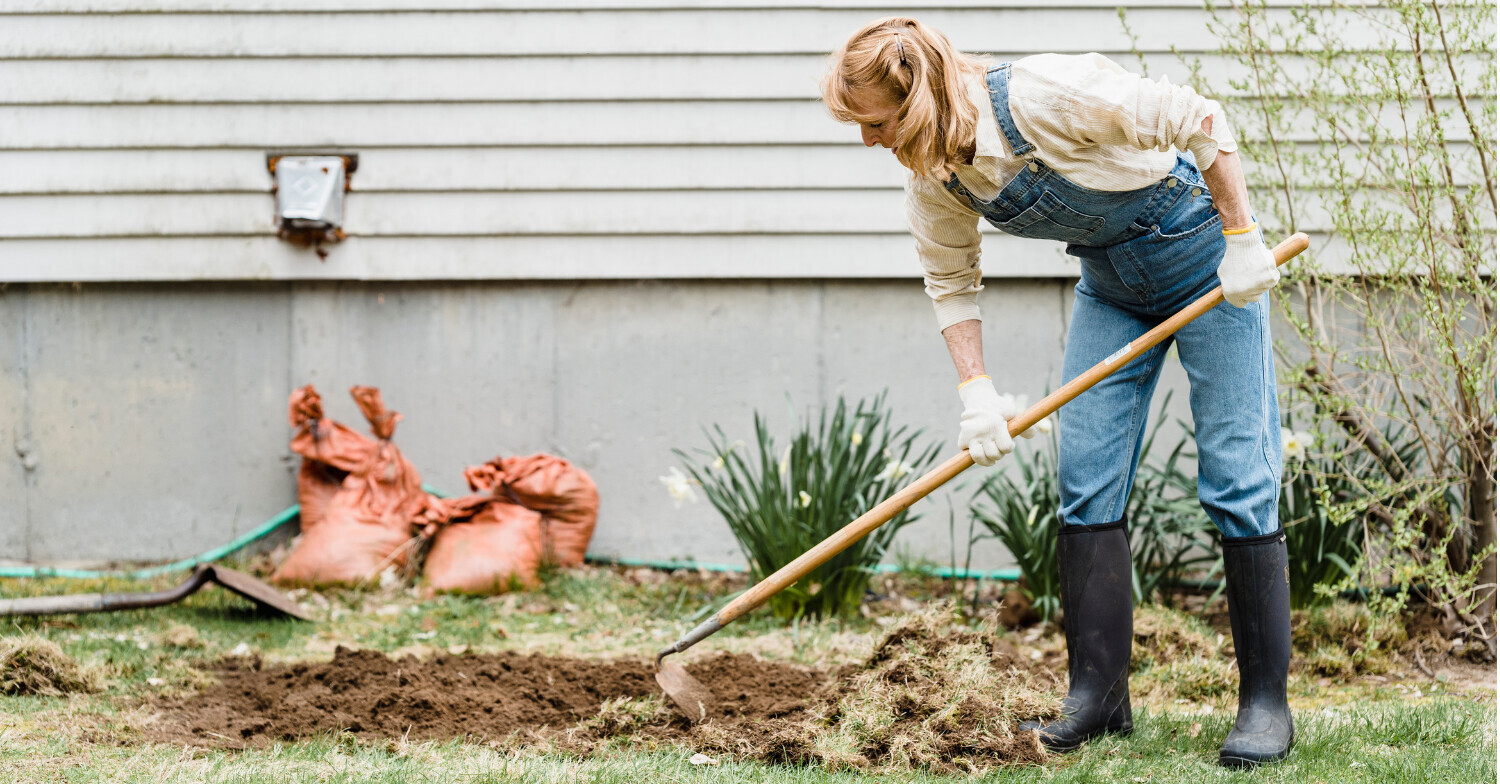
The yards around Fayette and Coweta County are looking incredible right now. Fresh mulch, trimmed hedges, flower beds finally under control. And every summer, right on schedule, my treatment table fills up with the people who made all that happen — nursing a low back that's stiff, sore, and not cooperating.
Here's the part most people don't realize: it's usually not the effort that gets you. It's the position. Hours of bending, twisting, reaching, and lifting add up, and your low back quietly absorbs the bill. The good news is that a handful of small changes — and a few smart pieces of gear — can keep you out of pain and in the garden all season.
After 25 years of helping active people stay that way, these are the habits I come back to again and again.
Why yard work is so hard on your back
Think about what weeding actually looks like: you're bent forward at the waist, often twisted to one side, holding that position for minutes at a time, then repeating it for hours. Add in lifting bags of soil and mulch, dragging hoses, pushing a mower, and hauling debris, and you've created the perfect storm for your lumbar spine and discs.
Your back is built to move, not to hold one loaded, bent position over and over. The damage is rarely one dramatic moment — it's cumulative. That's exactly why so many people feel fine during the work and pay for it that night or the next morning.
6 habits that protect your back in the yard
1. Warm up like it's a workout because it is. You wouldn't sprint without warming up, and yard work is genuinely athletic. Spend three to four minutes getting loose: a few gentle torso rotations, some standing back bends, and a short walk. Warm tissue is far more forgiving than cold tissue.
2. Hinge, don't hunch When you weed, plant, or reach low, bend from your hips with a flat back rather than rounding your spine. Picture closing a car door with your hips. And switch sides often — staying twisted in one direction is one of the biggest hidden culprits behind a sore low back
3. Lift smart Mulch and soil bags are deceptively heavy. Get close to the load, bend your knees, keep it near your body, and let your legs do the work — not your spine. If a bag feels like too much, split it or use a cart. Your back will never regret the extra trip.
4. Let the right tools do the bending for you. This is where a few simple purchases pay for themselves. Long-handled and ergonomic tools keep you upright instead of stooped, a kneeler protects your knees and your back, and a wheeled cart means you carry far less. (Specific recommendations below.)
5. Reset every 20 minutes Set a timer if you have to. Every twenty minutes, stand up tall, roll your shoulders back, gently arch backward, and take a short walk before you dive back in. This one habit alone prevents more flare-ups than almost anything else, because it interrupts the sustained bending before it locks you up.
6. Cool down and recover When you're done, don't go straight to the couch. Walk for five minutes, do a few gentle stretches, and if you're feeling it, apply heat to relax tight muscles or cold to calm an irritated area.
Back-saving gear worth owning
You don't need much, but the right equipment makes a real difference in how your back feels at the end of the day. These are the categories I recommend to patients:
- A garden kneeler or kneeling bench with handles. Kneeling instead of stooping takes enormous strain off your low back, and the handles help you get up and down without twisting. garden kneeler bench with handles
- Long-handled / ergonomic tools. A stand-up weed puller or long-handled cultivator lets you tackle weeds without folding over at the waist for hours. stand-up weed puller
- A garden cart or wagon. Rolling your mulch, soil, pots, and tools beats carrying them every time. This is the single best purchase for protecting your back during big projects. heavy-duty garden cart/wagon
- A rolling garden seat or scooter. For planting and low bed work, sitting and rolling keeps you off your knees and out of a stooped position. rolling garden seat/scooter
- A reusable hot/cold pack for after. Heat before, cold after — a flexible wrap-style pack is handy to keep in the freezer for those nights your back reminds you it worked hard. flexible hot/cold therapy wrap
When soreness is more than just soreness
Here's the line every weekend gardener needs to know. Ordinary muscle soreness shows up the next day, feels like a dull ache, and eases within a day or two as you move around. That's normal.
What is not normal — and not something to push through — is pain, numbness, tingling, or weakness that travels down into your buttock, thigh, or leg. That pattern can signal that a disc or nerve in your low back is involved, and it tends to get worse, not better, when you ignore it and keep working. If that's you, stop and get it looked at. Catching a disc issue early is dramatically easier than rescuing it after weeks of "powering through."
How we help (gently)
At Restorative Care, we specialize in exactly this kind of low-back and disc trouble, and we do it with gentle, low-force techniques — no aggressive twisting or cracking required. For an acute flare-up, we'll often use our Class IV laser to calm the irritated tissue before any hands-on work, and for disc-related pain we use targeted spinal decompression to take pressure off the nerve.
The goal is never just to take the edge off so you can limp through the weekend. It's to find why your back keeps getting cranky and fix the root, so you can enjoy your yard — and your summer — without paying for it later.
If your back is already letting you know it overdid it, don't wait it out. A short visit now is far easier than a flare-up that sidelines you for the season.
Book your evaluation: BOOK NOW — or call us at 678-519-0632.
Restorative Care Chiropractic • 111 Petrol Point, Suite A3, Peachtree City, GA 30269 • Serving Peachtree City, Fayetteville, Tyrone, Newnan, Senoia, and the surrounding Fayette & Coweta County area.
Disclosure: This post contains affiliate links. As an Amazon Associate, Restorative Care Chiropractic may earn a small commission from qualifying purchases, at no additional cost to you. We only recommend products we believe can genuinely help our patients move and feel better.This article is for general education and is not a substitute for an in-person evaluation or individualized medical advice.
Julie O'Shaughnessy
Contact Me